

This online library is a clearinghouse of tools and information related to habitat on rights-of-way and other lands. From seed mix calculators to mowing guidelines and everything in between, you’ll find it here.

Best Management Practices

Best Management Practices
This paper published by HortTechnology evaluates the efficacy of alternative methods of vegetative control of roadside vegetation, including citric acid, clove oil, corn gluten meal, pelargonic acid, woodchips, bark mulches, and burning to conventional herbicides.

Best Management Practices
This document developed by MaineDOT in collaboration with Wild Seed Project to help learn more about the needs of native plants along roadsides and to support pollinators. This guide aims to help roadside managers transition to creating native plant habitat along Maine’s travel corridors. It also provides information needed to plant new or manage existing populations of 70 species of wildflowers, shrubs, and grasses.
Best Management Practices
This report was developed by Maine Department of Transportation to better understand how they can maximize benefits in Roadside Vegetation Management, by conducting a research project by the Maine Natural Areas Program (MNAP) to investigate invasive plant and native plant diversity along the roadsides.
Best Management Practices
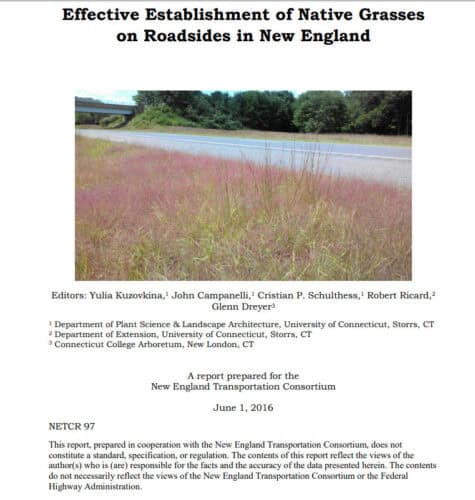
This manual prepared by University of Connecticut provides guidelines for establishment of native species on roadsides in New England which supports transportation goals for safety and infrastructure reinforcement while providing economic, ecological and aesthetic advantages. It provides provides region-specific information derived from the literature reviews, interviews with experts and practitioners, and field experiences obtained during the establishment of the regional demonstration plots.
Best Management Practices
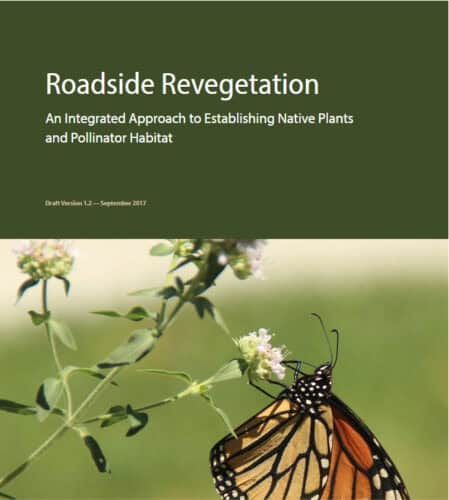
This report by the Federal Highway Administration offers an integrated approach to facilitate the successful establishment of native plants and pollinator habitats along roadsides and other areas of disturbance associated with road modifications. It guides readers through a comprehensive process of: 1) initiating, 2) planning, 3) implementing, and 4) monitoring and managing a roadside revegetation project with
native plants and pollinator habitat.