

What is eDNA?
Environmental DNA (eDNA) is the genetic material that an organism leaves behind in the natural environment, which can include hair, skin, saliva, and feces. These can be used to detect the presence of a species in a surveyed area and can offer a more cost-effective and rapid detection process.
Pollinator eDNA samples are typically collected through sampling flowers and other plant material or through airborne collection. DNA is then extracted and analyzed within a laboratory.
How will eDNA data support the NEST project?
Throughout the NEST project, eDNA surveys will be led by the Illinois Natural History Museum’s Collaborative Conservation Genetics Laboratory. eDNA surveys will be collected to complement remote imagery habitat assessments. The findings from these emerging survey methods will then be compared to traditional ground surveys to evaluate their effectiveness and usability.
Four eDNA surveys will take place throughout each field season at the same time as conventional pollinator surveys. At each survey site, 4 eDNA samplers will be established to collect samples from both plants and pollinator species. Collected samples will then be analyzed to determine an estimate of species diversity and richness using the following metrics:

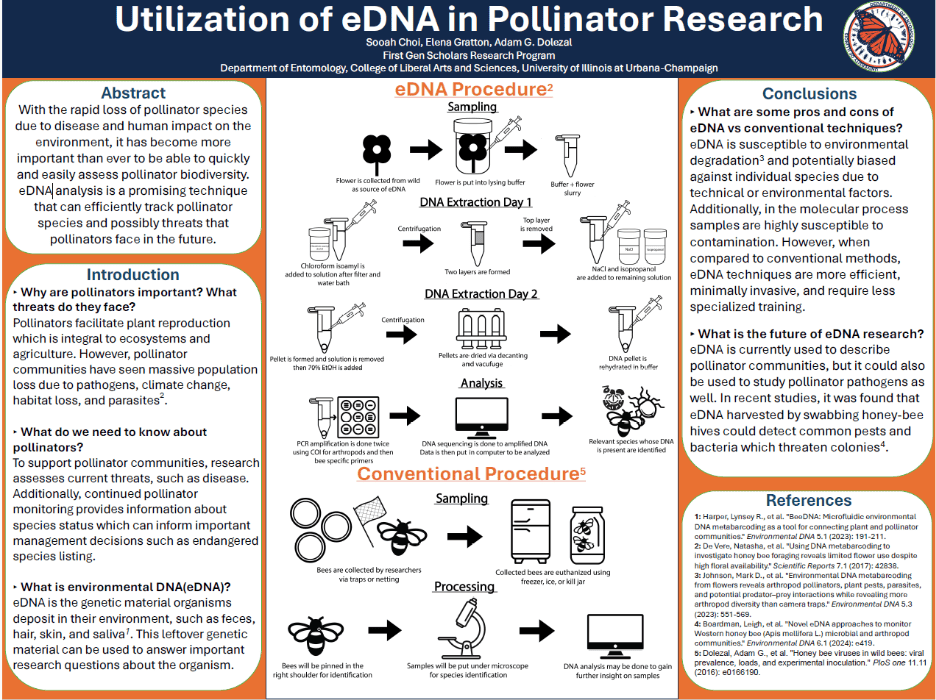
An overview of the eDNA process for pollinator research, as compared to traditional sampling techniques. This poster was developed by an undergraduate student working at UIUC’s Dolezal Bee Lab.