
The National IPM Database is a searchable database comprised of Pest Management Strategic Plans (PMSPs), Crop Profiles, Elements, and Timelines. It also houses four regional IPM centers with additional region-specific resources.
Integrated pest management (IPM) practices on rights-of-way are primarily embodied by a suite of practices known as integrated vegetation management (IVM). While IVM is generally considered a specific application of IPM, they are different in focus. As implied in its name, IVM is focused on vegetation, whereas IPM includes both vegetation and other potential pests such as bacteria, fungus, insects, or wildlife that may cause unwanted or detrimental effects. Most energy and transportation lands focus exclusively on vegetation management for safety, reliability, and other objectives.
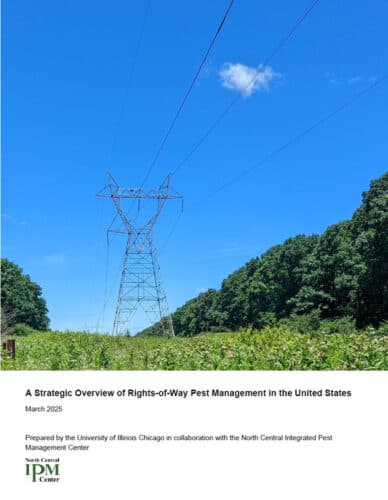
The Right-of-Way Pest Management Strategic Plan provides a comprehensive overview of IVM applications in the energy and transportation sectors.
This and other introductory resources on IPM and IVM relevant to rights-of-way managers are provided below. Additional case studies, research, and tools on IVM can be found in our general Resources Library.
Search the online library below for introductory resources related to integrated pest and vegetation management (IPM, IVM), including published guidance, databases, and scientific journal articles.

Best Management Practices
This document introduces the use of IPM on agricultural lands and general guidance on integrating fish and wildlife considerations into IPM plans. The role of wildlife as an agent of integrated pest management is also introduced.
https://efotg.sc.egov.usda.gov/references/public/SC/IPM_for_Wildlife.pdf
Best Management Practices
The PMSP serves as a primer for understanding ROW vegetation management through sustainable and effective strategies while balancing infrastructure needs with environmental management.
Best Management Practices
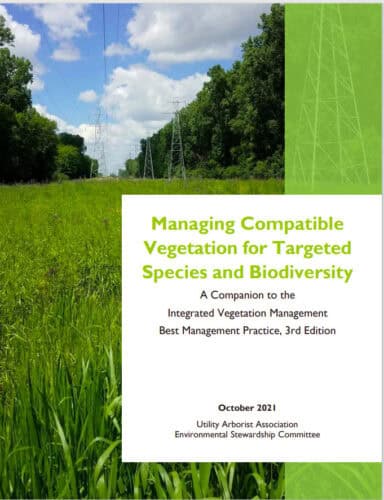
This guideline, developed by the Utility Arborist Association Environmental Stewardship Committee, provides a primer on how to incorporate the management of compatible vegetation for target species and biodiversity into Integrated Vegetation Management programs.
Best Management Practices
The Iowa Living Roadway Trust Fund provides detailed information about integrated roadside vegetation management (IRVM) and IRVM plans on their website.

Best Management Practices, Policy and Publications
This technical note was developed in collaboration with the U.S. Department of Agriculture, Natural Resources Conservation Service, and The Xerces Society for Invertebrate Conservation. It was designed to help conservation planners prevent or mitigate pest management risks to pollinators and pollinator habitat, particularly in agriculture settings.
Get in touch with us regarding herbicide labeling and applications, invasive species, the National IPM database, and any IVM strategies that you have found to be effective through your work that you would like to share with us.
This project is funded through the North Central Integrated Pest Management Center.
This work is supported by the Crop Protection and Pest Management Program, project award no. 2022-70006-38001, from the U.S. Department of Agriculture’s National Institute of Food and Agriculture.