
This online library is a clearinghouse of tools and information related to habitat on rights-of-way and other lands. From seed mix calculators to mowing guidelines and everything in between, you’ll find it here.
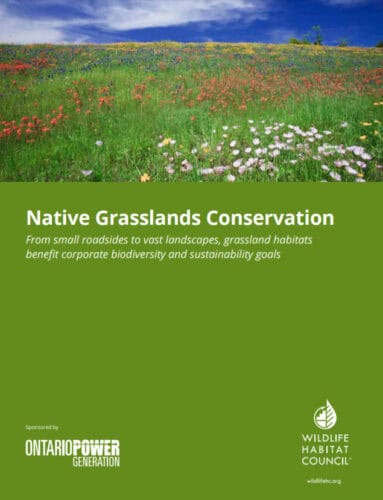
This WHC white paper provides short case studies on lawn replacement, roadsides, utility rights-of-way, ranches and pastures, and more. An opportunity exists for corporations to manage privately owned grasslands in nature-friendly ways that will realize multiple values for many stakeholders, including benefits to climate change mitigation and adaptation, stormwater run-off, cost savings and aesthetics.
Conservation Agreements
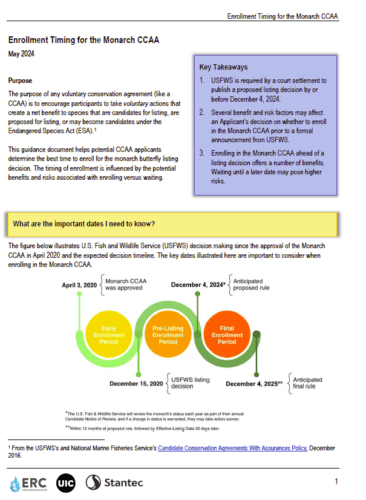
This guidance document summarizes the different considerations for the timing of enrollment in the Monarch CCAA.
Updated 5/15/2024.
Assessment Tools, Webinars
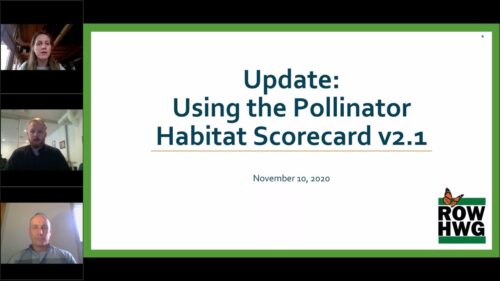
Learn about the latest updates to the Rights-of-Way as Habitat Working Group’s Pollinator Scorecard, including how the scorecard can be used to meet the monitoring requirements of the Monarch CCAA. This video will also touch on plot selection and distribution, the associated management module, and how to interpret scorecard results.
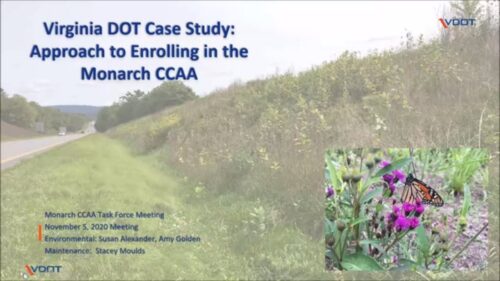
Virginia Department of Transportation’s Approach to Enrolling in the Monarch CCAA – November 5, 2020
Webinars
Virginia DOT shares their story of enrolling in the Monarch CCAA, from application to implementation and monitoring.
Webinars
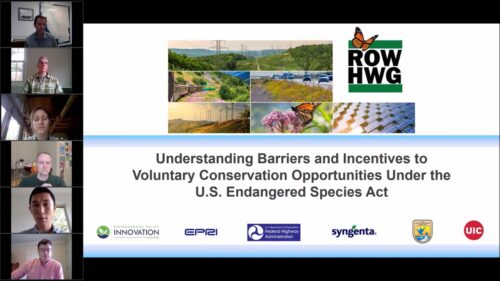
Following the publication of a study by the Electric Power Research Institute that evaluated barriers and incentives to voluntary species conservation in the electric utility sector, representatives from across the energy, transportation, agriculture, non-profit, and government agencies discuss the future of voluntary conservation and multi-sector strategies for at-risk and listed species.
Policy and Publications
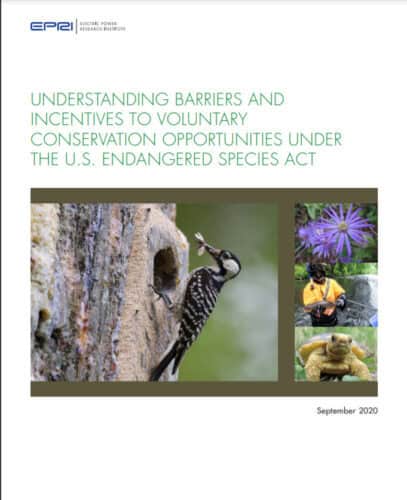
This report by the Electric Power Research Institute and Environmental Policy Innovation Center helps electric power and other companies to better understand the factors that motivate companies to pursue voluntary species conservation and how to lower the barriers to voluntary conservation under the U.S Endangered Species Act (ESA).